Key Features and Applications
Ergonomic Straight Design
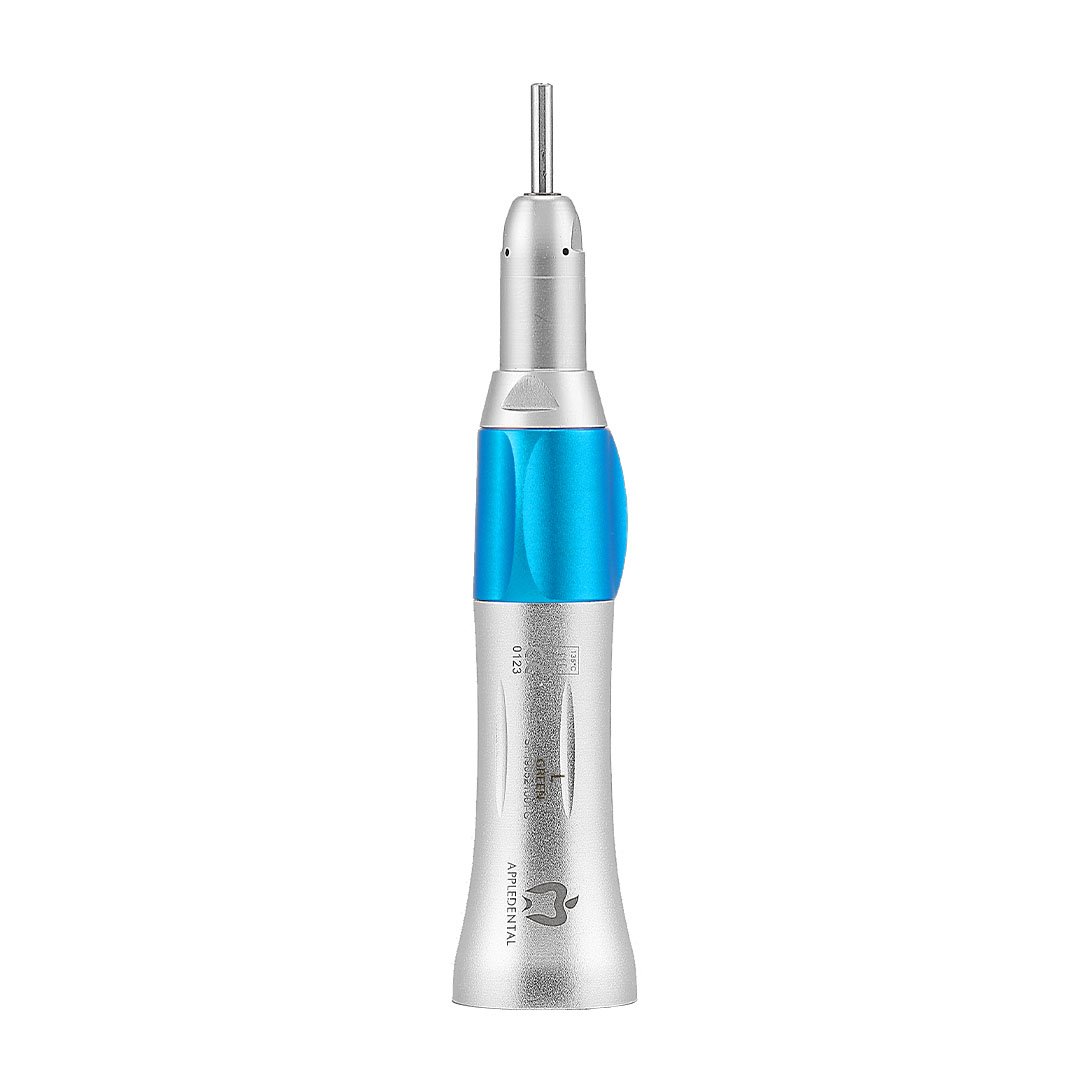
Unlike contra-angle handpieces, the straight, elongated design provides a direct, linear approach to the working surface. This makes it ergonomically ideal for extraoral procedures, bench work, and specific intraoral trimming tasks. The straight form offers excellent control, balance, and operational stability.
Versatile Laboratory Workhorse
The straight handpiece is the standard tool for most dental laboratory applications. It is widely used for trimming, grinding, polishing, and adjusting acrylic dentures, temporary restorations, and orthodontic appliances. It is also commonly used chairside for occlusal adjustments and polishing, particularly on external surfaces.
High Torque at Low Speeds
With a typical 1:1 direct drive gear ratio, the handpiece maintains the high-torque characteristics of the air motor while operating at speeds of up to approximately 20,000 RPM. This prevents stalling even when moderate pressure is applied during acrylic trimming or while working on heavy restorative materials.
Friction Grip (HP) Bur Compatibility
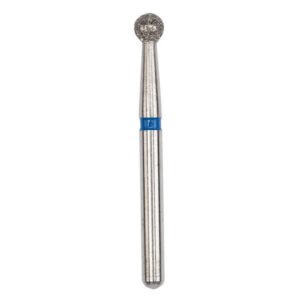
The straight nosecone is designed to accept long-shank HP (Handpiece) laboratory burs and mandrels. These attachments are longer and thicker than RA (latch-type) burs used in contra-angles, making them ideal for heavy-duty laboratory and adjustment procedures.
Secure Connection
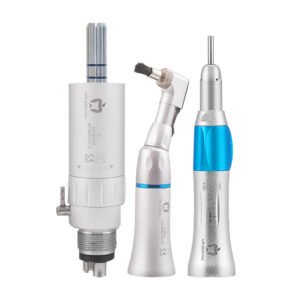
The handpiece attaches securely to the air motor, typically via a durable latch mechanism. The motor itself connects to the dental unit’s tubing through a standard 2-hole or 4-hole connection, ensuring reliable operation.
Durable and Autoclavable Construction
The handpiece is built with robust internal components and durable materials to withstand continuous high-torque laboratory use. It is fully autoclavable up to 135°C, ensuring strict compliance with infection control and sterilization standards.


Reviews
There are no reviews yet.