Key Features and Function
Primary Purpose
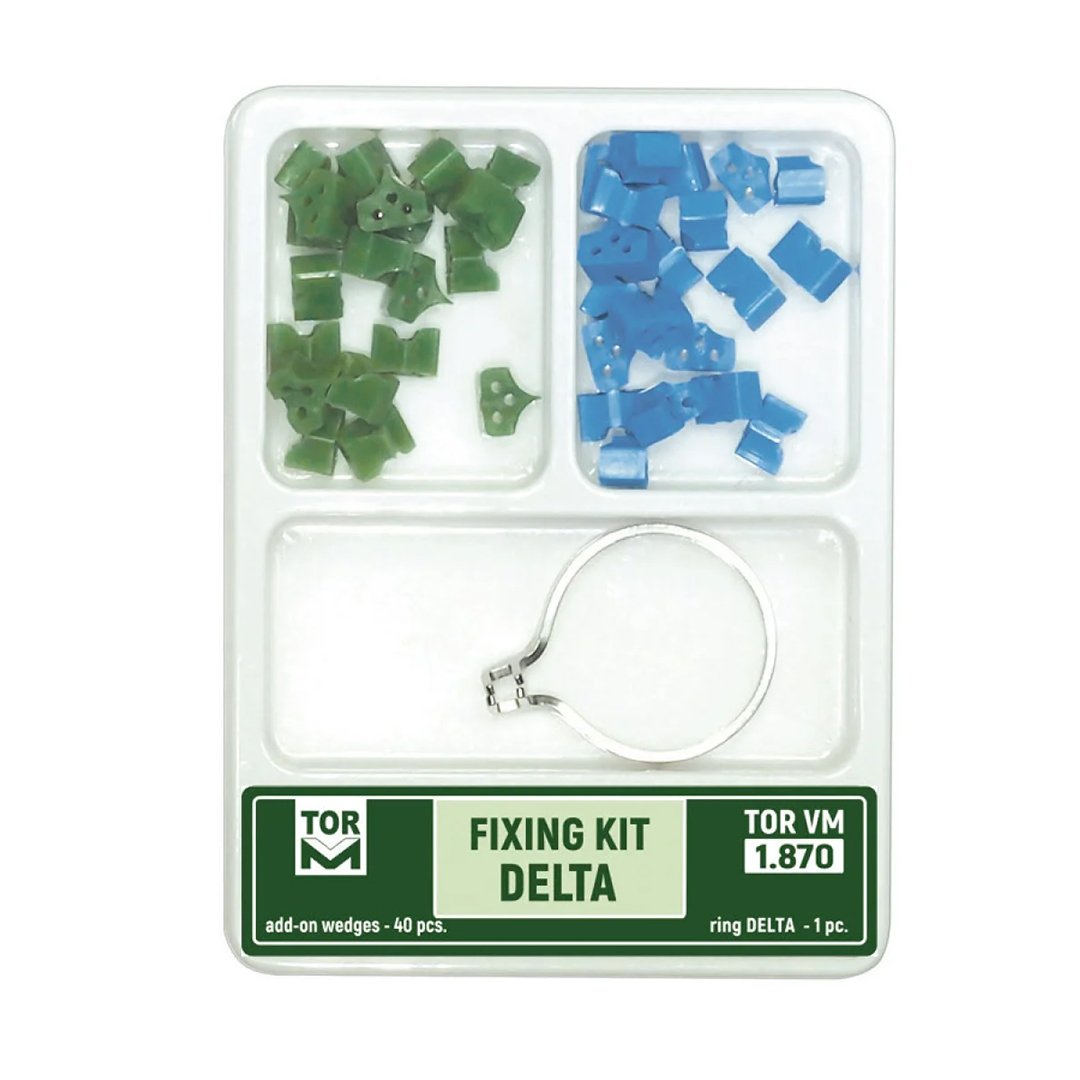
The wedges serve two critical functions during restorative procedures. First, they create an effective gingival seal, preventing composite or amalgam from flowing beyond the cervical margin and forming overhangs. Second, they provide matrix stabilization by holding the sectional or saddle matrix firmly against the tooth structure, preventing displacement during material placement.
Separation (Optional Function)
When inserted interproximally, the wedges can also contribute to minor, temporary tooth separation. This small degree of separation assists in achieving a tight and proper proximal contact after removal of the matrix and clamp.
Material
The wedges are typically manufactured from flexible, biocompatible plastic or wood. Plastic wedges are often preferred because of their uniform shape, predictable performance, and resistance to moisture absorption, which maintains consistent sealing behavior.
Kit Contents (N 1.861 – 40 Pieces)
The N 1.861 kit contains 40 wedges, supplied in multiple sizes to accommodate the varying interdental spaces of premolars and molars. The wedges are color-coded for fast identification, commonly including:
Design
Each wedge features an anatomical, tapered design that allows easy insertion and ensures a firm, stable grip within the interdental space.
Clinical Benefits
Prevention of Overhangs
Effective sealing at the gingival box margin prevents restorative material overhang, which is essential for protecting periodontal tissues.
Matrix Stabilization
The wedge ensures the matrix remains rigid and accurately contoured during packing and curing, resulting in well-adapted and anatomically correct margins.
Facilitation of Tight Contact
By providing initial separation, the wedge works in synergy with the matrix clamp system to achieve a strong, functional proximal contact point.

Reviews
There are no reviews yet.