
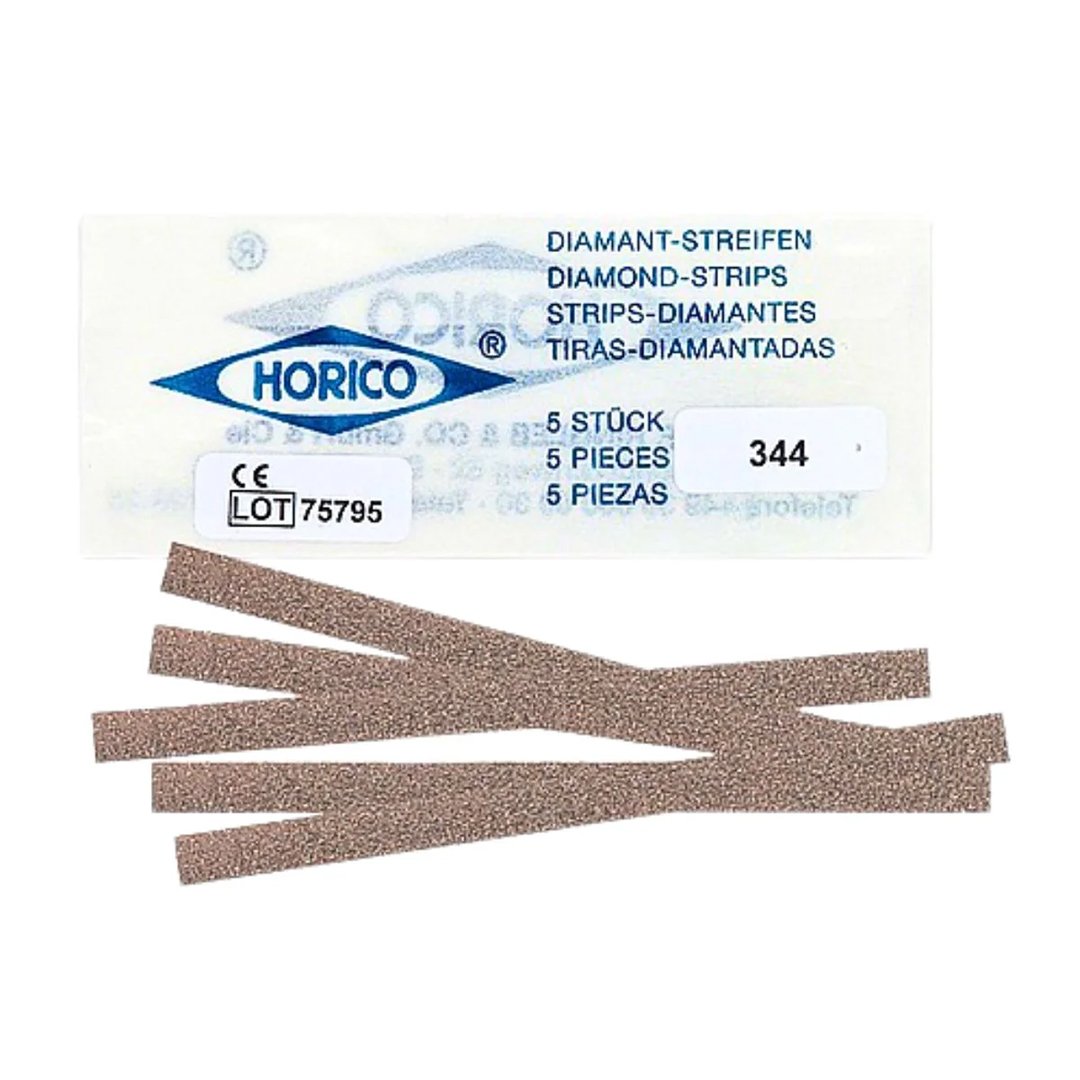
Interproximal Diamond Strips
EGP660.00
Contact Perfection, Polished
Coating and Grit System
These strips are available in a graduated sequence of diamond grits, including Coarse, Medium, Fine, Extra-Fine, and Ultra-Fine. This progression allows clinicians to follow a systematic treatment protocol, starting with coarse grits for initial reduction or stripping, then moving to finer grits for contouring, finishing, and final polishing.
Single-Sided vs Double-Sided Coating
The strips may be single-sided or double-sided.
-
Single-sided strips are ideal when enamel reduction is required on only one tooth surface, helping protect the adjacent tooth from unintended abrasion.
-
Double-sided strips allow simultaneous reduction of both adjacent surfaces, increasing efficiency when bilateral adjustment is needed.
Design and Perforation Options
Strips may be fully coated or perforated, and some designs include a central non-diamond-coated gap.
-
Perforations improve debris removal and enhance cooling during use.
-
A center gap facilitates safer and easier insertion through tight contact points, reducing the risk of unintended cutting during placement.
Material and Durability
The strips are manufactured from thin, flexible, rust-free stainless steel with electro-deposited diamond particles. This construction provides excellent durability, flexibility to adapt to tooth contours, and ensures the strips are fully autoclavable and sterilizable, supporting strict infection control protocols.
Width and Thickness Variations
These strips are available in multiple widths (commonly 2 mm, 4 mm, and 6 mm) and minimal thicknesses, typically ranging from 0.07 mm to 0.20 mm. This variety allows for precise enamel reduction, controlled contact adjustment, and access to different interproximal spaces based on clinical need.
Be the first to review “Interproximal Diamond Strips” Cancel reply
Related
Reviews
There are no reviews yet.