Key Features and Function
Active Ingredient
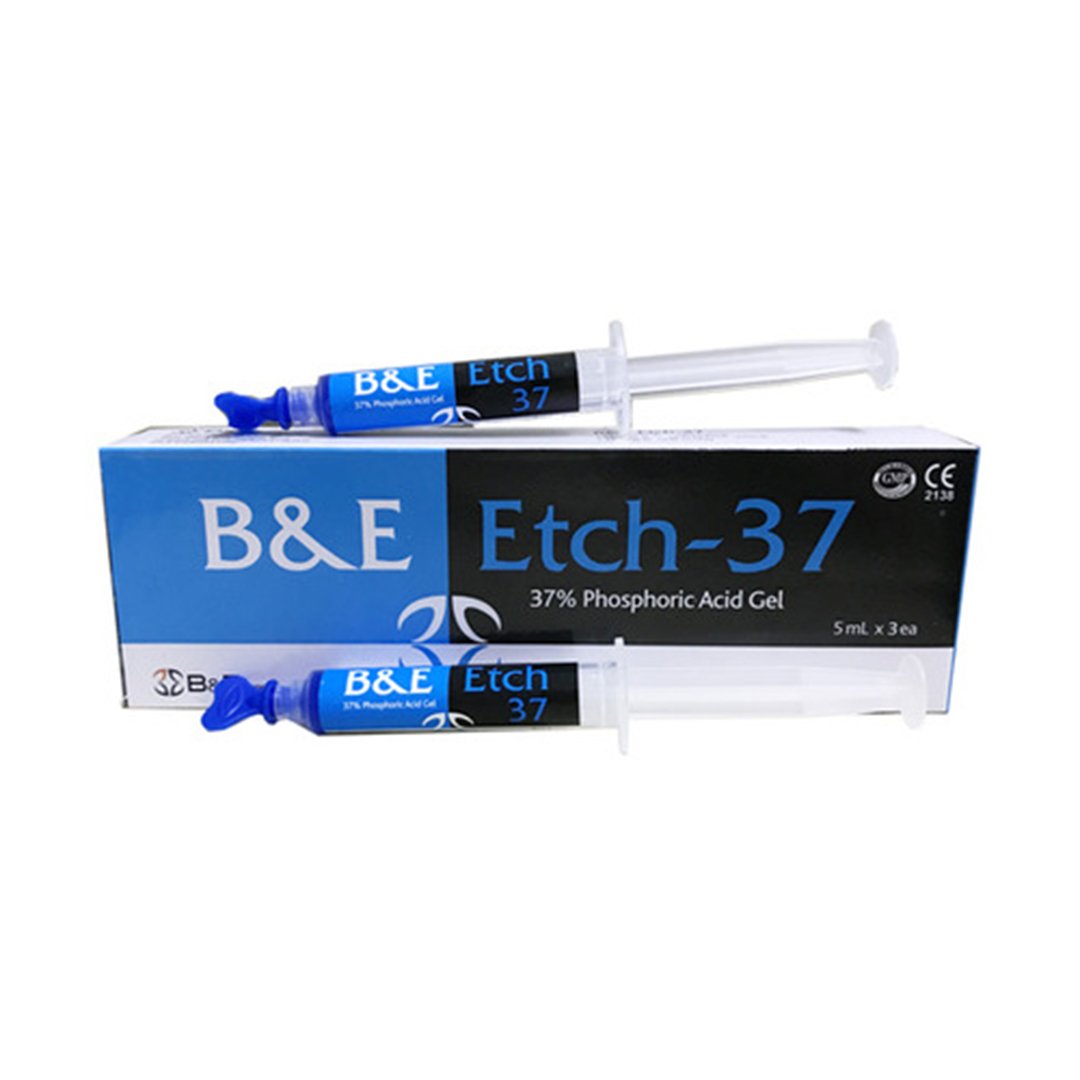
The primary active component of B&E Etching Agents is phosphoric acid, typically in a concentration ranging from 35% to 37%. This concentration is optimized to effectively prepare both enamel and dentin surfaces for adhesive bonding.
Mechanism of Action – Enamel Etching
On enamel, phosphoric acid selectively dissolves hydroxyapatite crystals, creating a microporous and roughened surface (etch pattern). This high-surface-energy condition is essential for achieving strong micromechanical retention of the adhesive resin.
Mechanism of Action – Dentin Etching
On dentin, the etchant removes the smear layer created during tooth preparation and partially demineralizes the superficial dentin layer. This process exposes the collagen matrix and opens the dentinal tubules, which is critical for proper hybrid layer formation and chemical bonding.
Consistency and Application
B&E Etching Agents are typically supplied as a viscous blue gel in syringes equipped with fine dispensing tips. The gel viscosity prevents unwanted spreading and allows precise, controlled application only to the intended bonding areas.
Visual Control (Blue Color)
The distinct blue coloration provides excellent contrast against the tooth structure. This makes it easy for the clinician to monitor the exact application area and to confirm complete removal during the rinsing phase.
Rinsing Protocol
After the prescribed etching time—commonly around 15 seconds for enamel and less for dentin—the etchant must be thoroughly rinsed with water to completely remove all residual acid before proceeding with the bonding process.



Reviews
There are no reviews yet.